
NicotineX
A smart cigarette case and companion app designed to help users gradually quit smoking through personalized control, progress tracking, and emotional support.
UI/UX Design
Branding
Blender
Figma
Individual Project
7 - week course project
This project introduces a smart cigarette case paired with a mobile app to guide users through the process of quitting smoking. Built around empathy and behavioral insight, the design limits cigarette access based on a personalized cessation plan while tracking progress and encouraging streaks. Users can also connect with therapists and access motivational tools that adapt to their habits.
“I wanted to design something that understands your habits better than your friends do—but doesn’t gossip about it.”

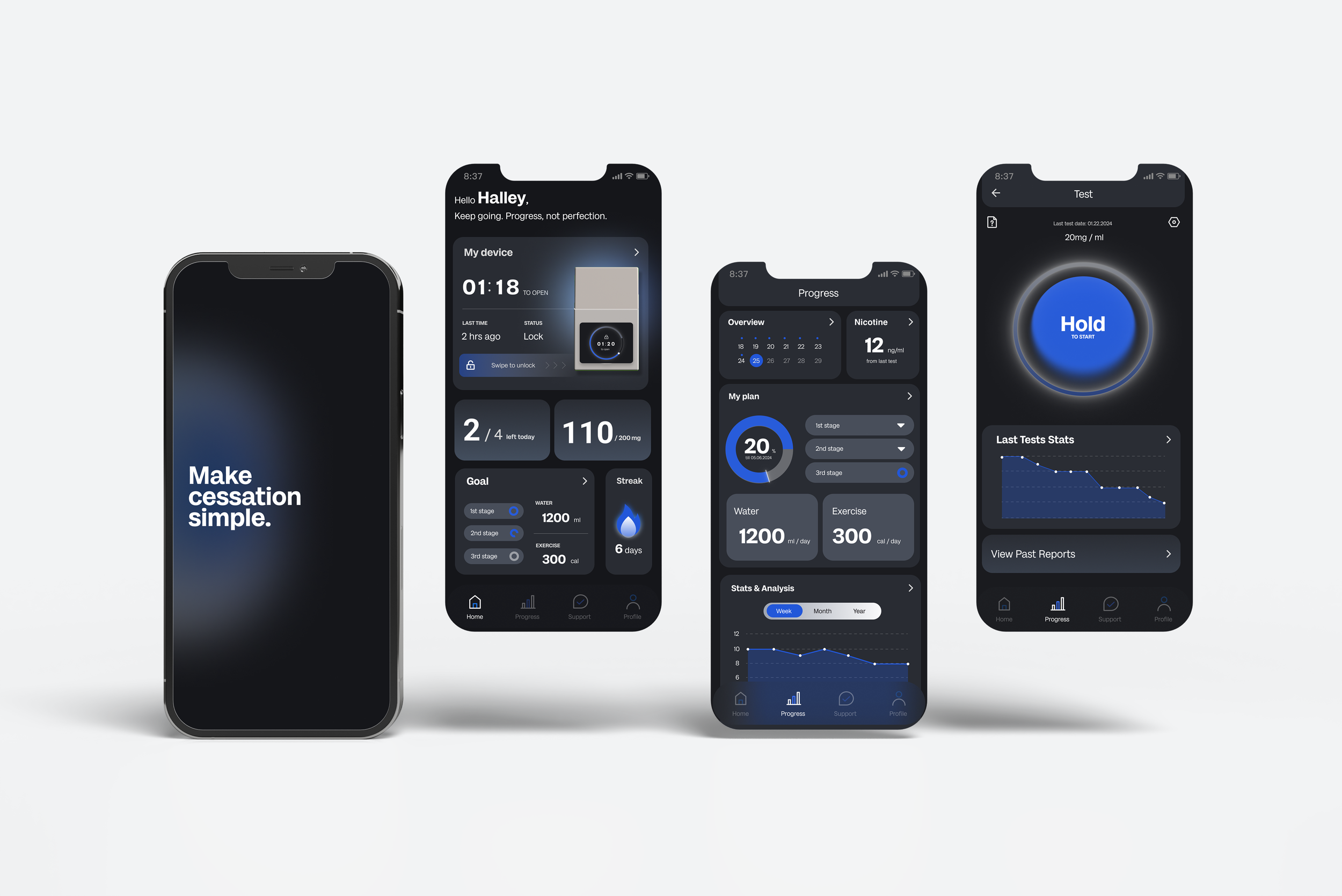
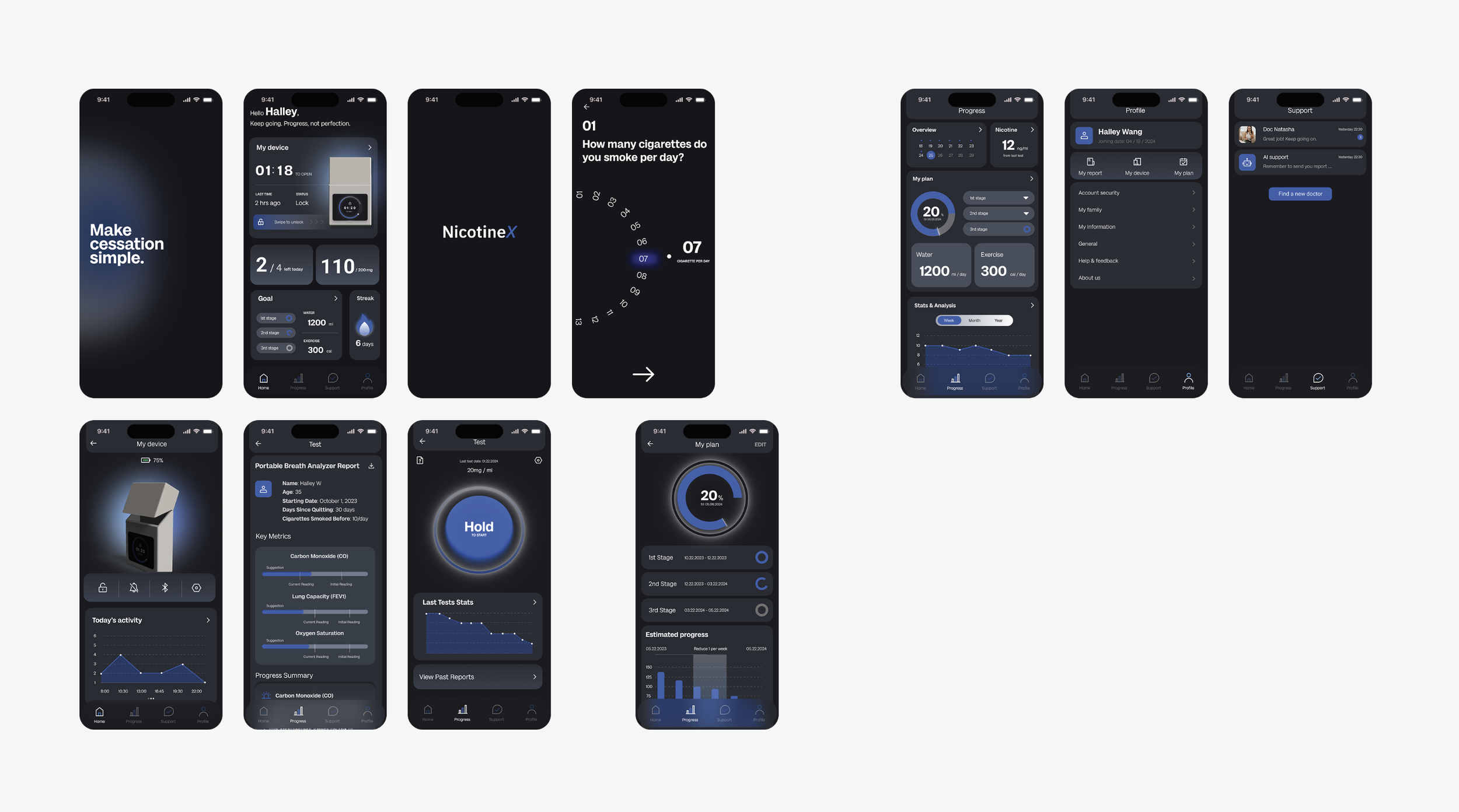
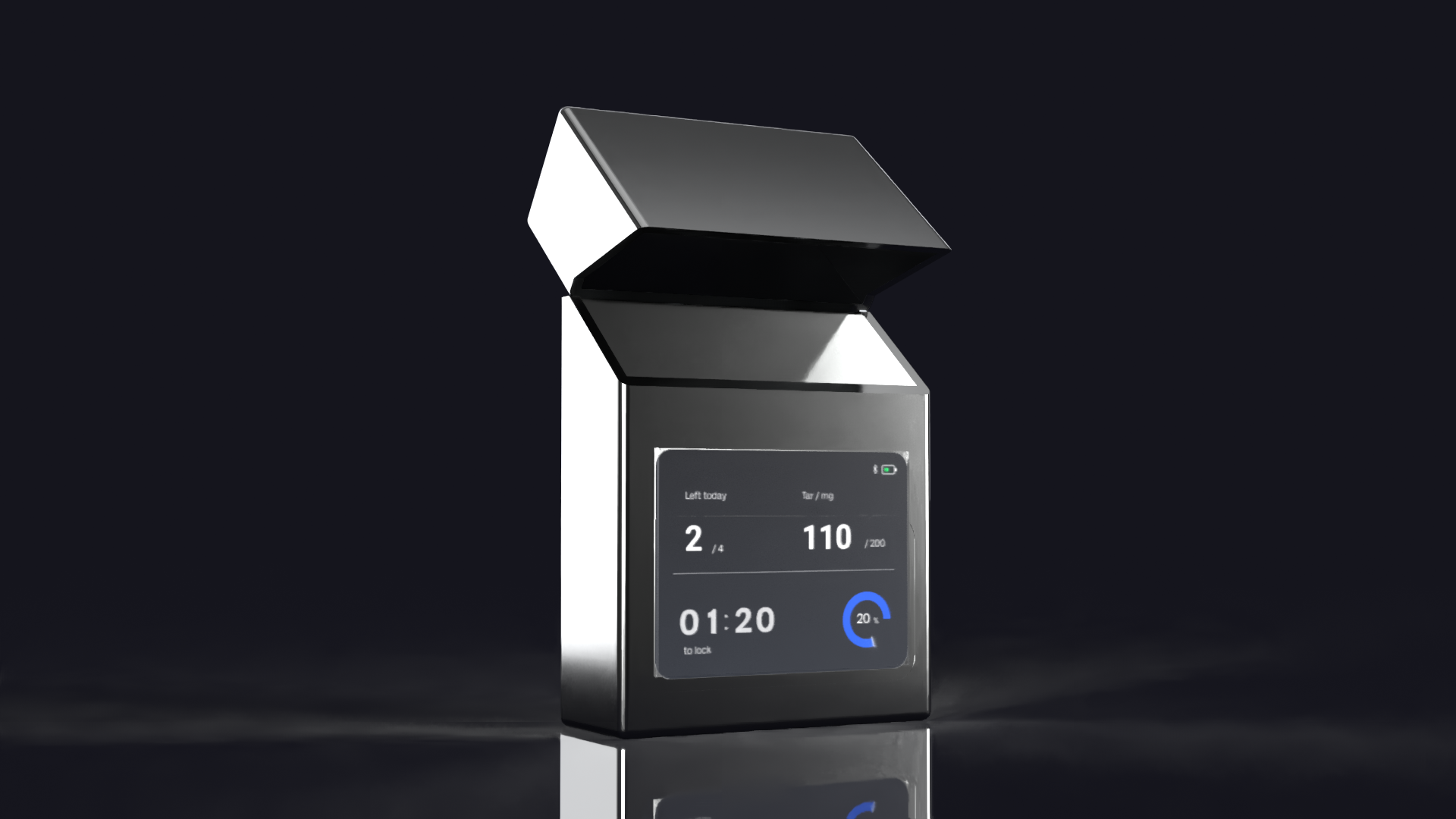

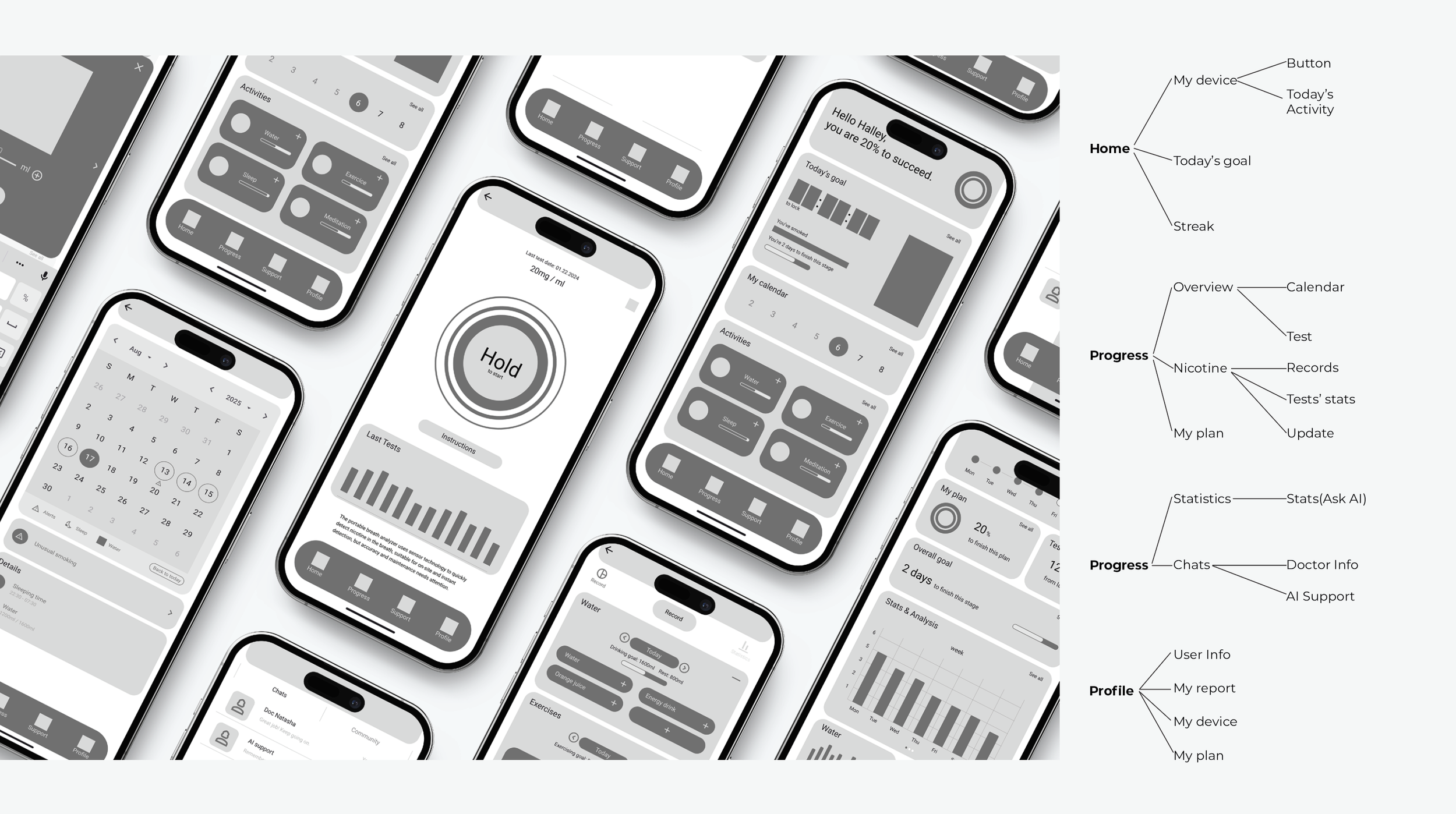
User Interface Design
The UI design emphasizes clarity and emotional balance through its clean, minimal design. Each screen highlights the user’s personalized quitting plan, progress tracking, and support tools, presented with intuitive layouts and gentle color palettes. The goal was to make the experience feel approachable and encouraging.
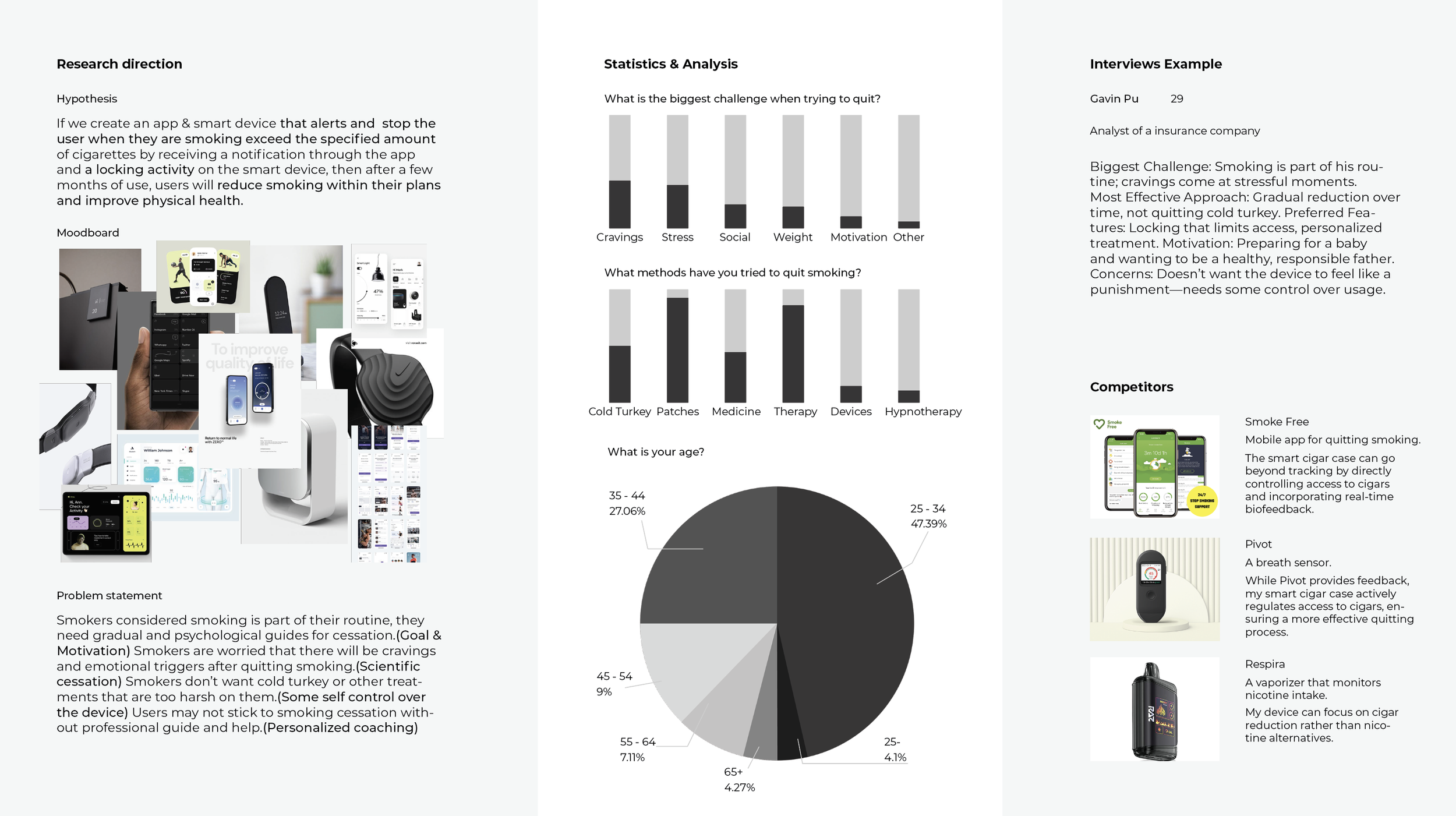
User Research
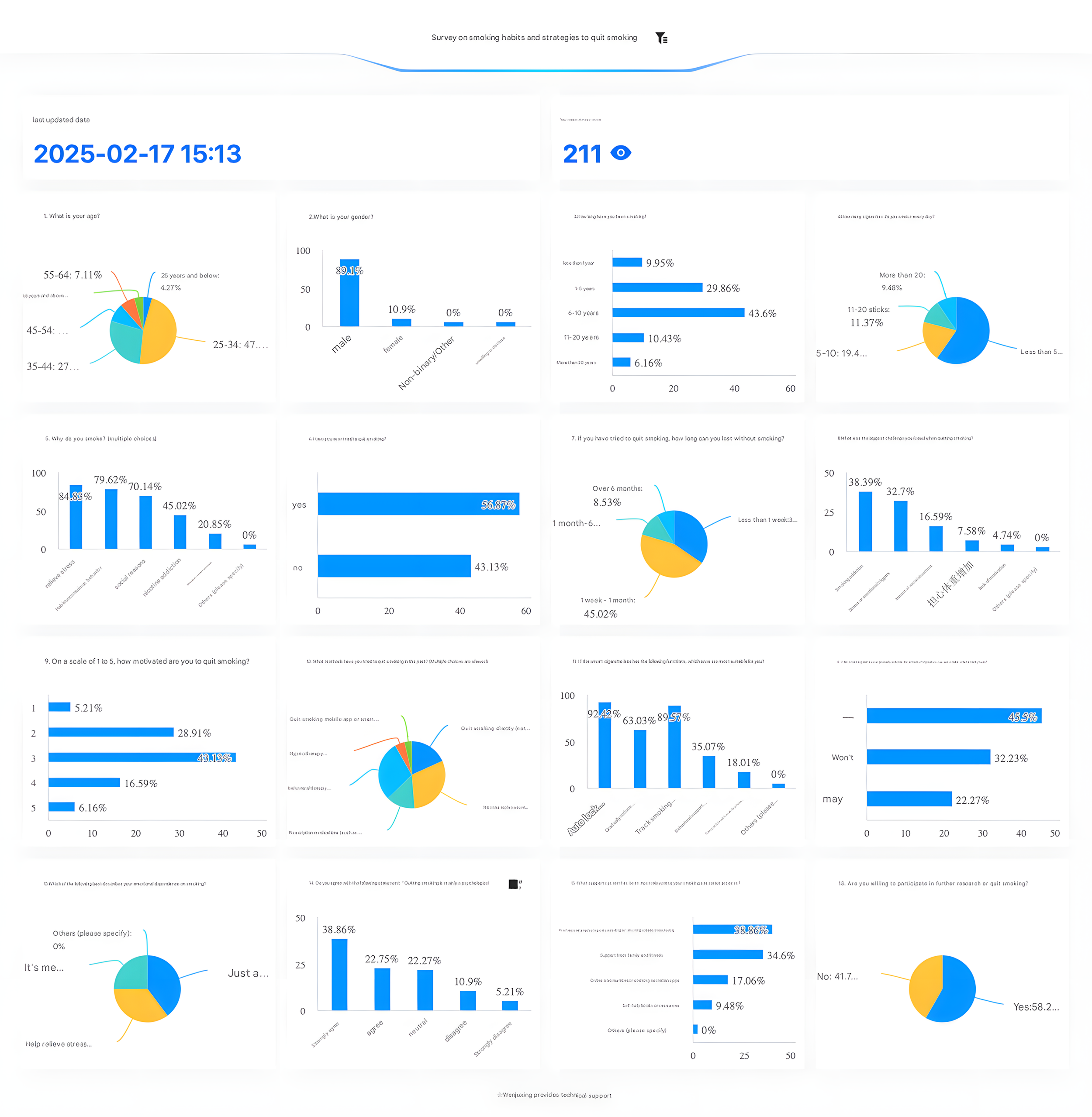
Through interviews and behavior studies, I discovered that quitting smoking is as emotional as it is physical. Users needed structure, empathy, and gentle accountability—insights that guided the design toward a supportive and understanding experience.
Branding and Visuals
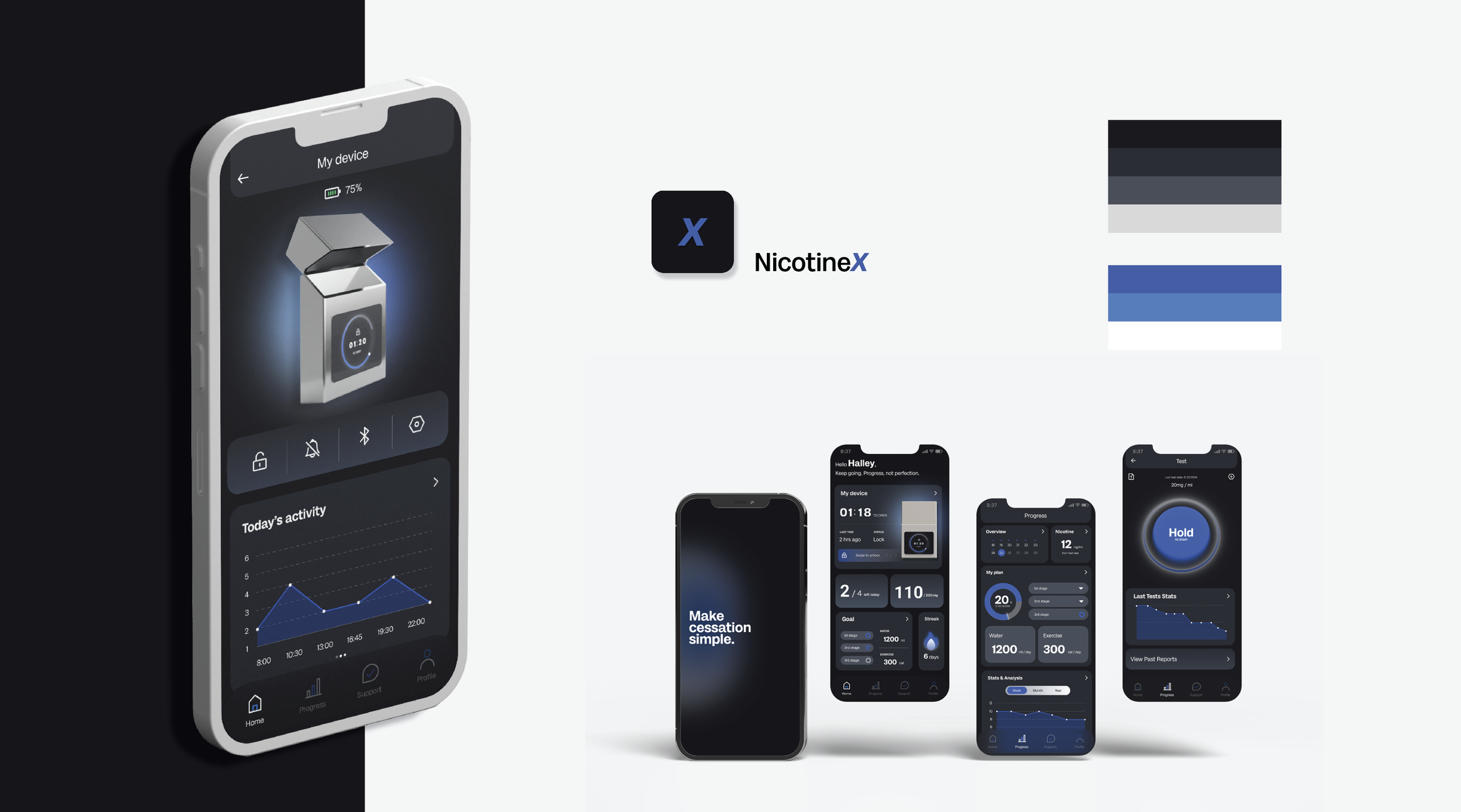
The branding combines calmness and clarity to reflect trust and support. Soft colors, rounded shapes, and minimal typography create a sense of comfort rather than pressure, helping users feel guided—not judged—through their quitting journey.
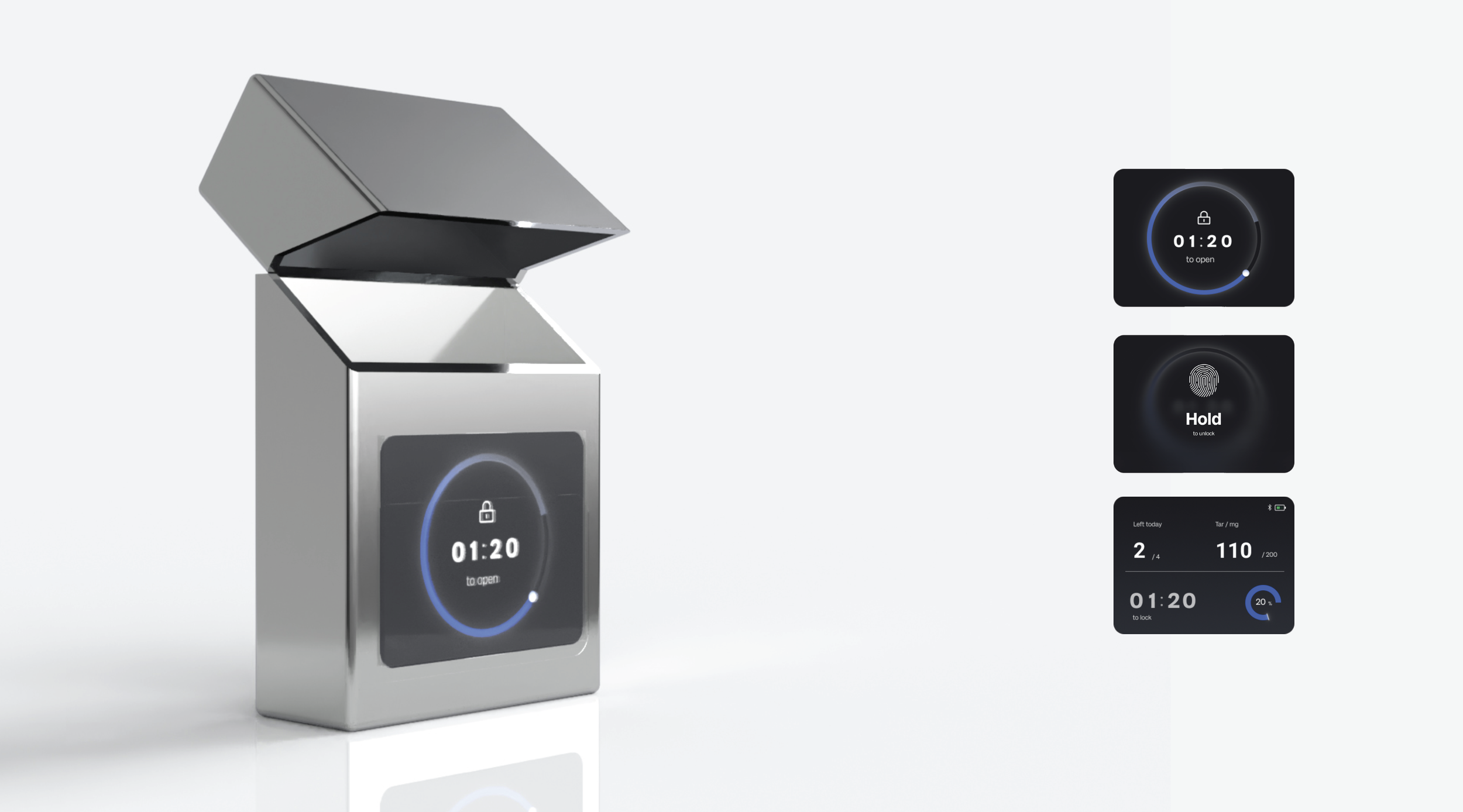
Product Visualization
The 3D prototype visualizes how the smart cigarette case functions in real life, featuring a sleek, compact form with a subtle locking mechanism.


“I didn’t set out to design a gadget—I just wanted to make self-control a little less painful and a lot better looking.”
Reflection
This project taught me that good design isn’t just about solving problems—it’s about understanding people. Working on something as personal as quitting smoking made me realize how emotional habits can be, and how design can quietly support change without judgment. It reminded me that empathy and restraint are just as important as aesthetics, and that sometimes the best design doesn’t shout—it simply helps.